What a 3-Star Korean Tasting Menu Actually Feels Like
Korean food in New York has always been good. What's happening at 2 Harrison Street is something else.
Korean food in New York has always been good. What's happening at 2 Harrison Street is something else.
If you've never thought seriously about Korean fine dining, the short version is this: it is one of the most technically demanding, aesthetically precise cuisines in the world, and it has been almost entirely absent from the upper tier of Western restaurant culture for most of modern dining history. That's starting to change. It's changing fastest in Seoul, where a generation of chefs trained in Europe and the US came home and built something new. And it changed in New York in 2012, when a chef named Jungsik Yim opened a restaurant in Tribeca that nobody quite had a category for.
New York took a while to catch up. Jungsik earned its first Michelin star in 2013, its second not long after, and its third in 2024, becoming the first Korean restaurant in the United States to reach that number. It was also the first new three-star restaurant this city had seen since 2012. Both facts are worth sitting with.
What Chef Yim built, and what Chef Daeik Kim now runs, is not Korean food dressed up for a Western room. It is not fusion in the way that word usually gets used, which is to say as a polite way of describing something that belongs fully to neither tradition. What's happening in that kitchen is Korean cuisine examined at the highest level and then pushed somewhere most kitchens, regardless of nationality, aren't willing to go.
The Restaurant
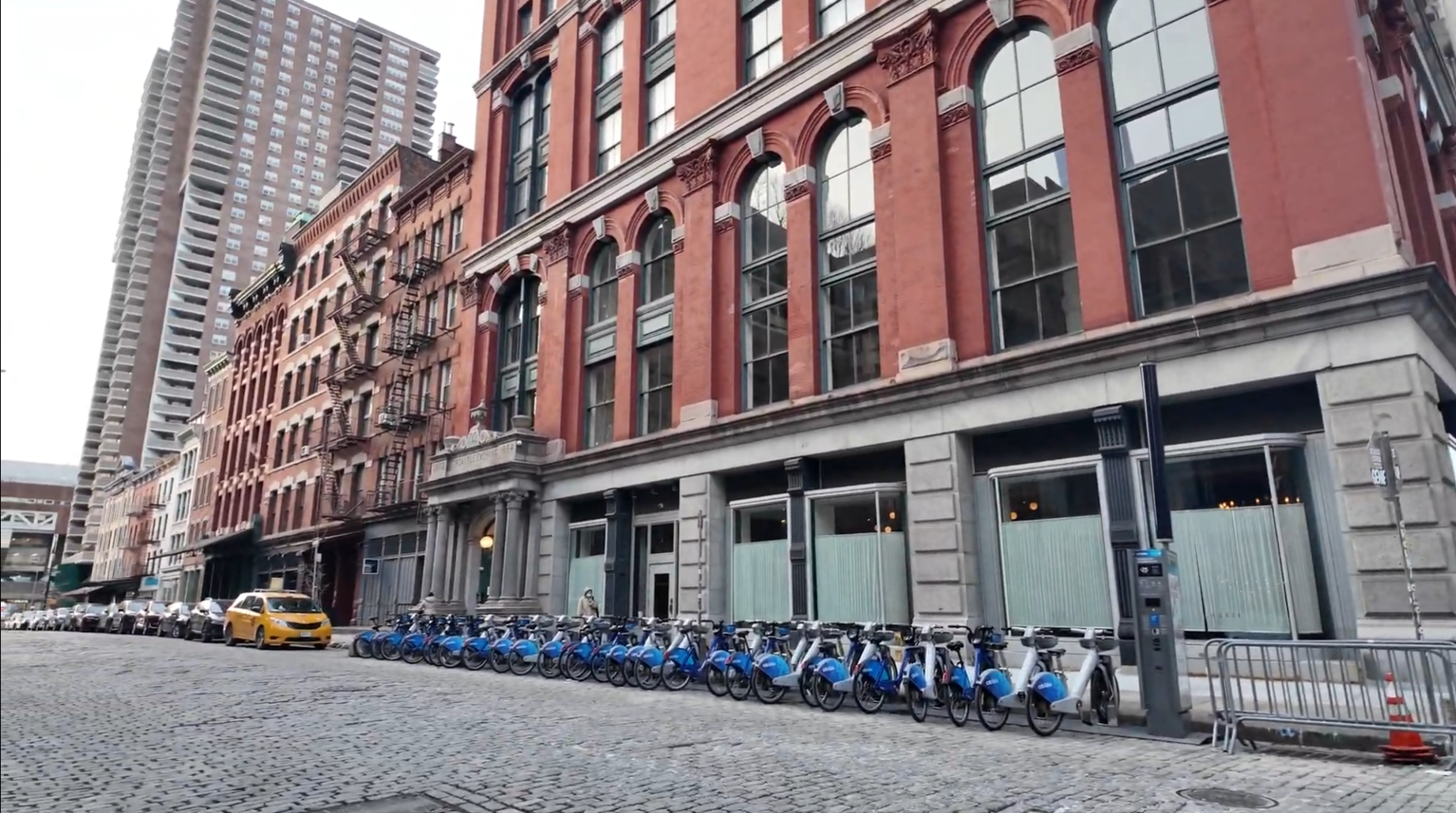
The address used to be Chanterelle, which tells you something about what this block has always meant to serious dining in New York.
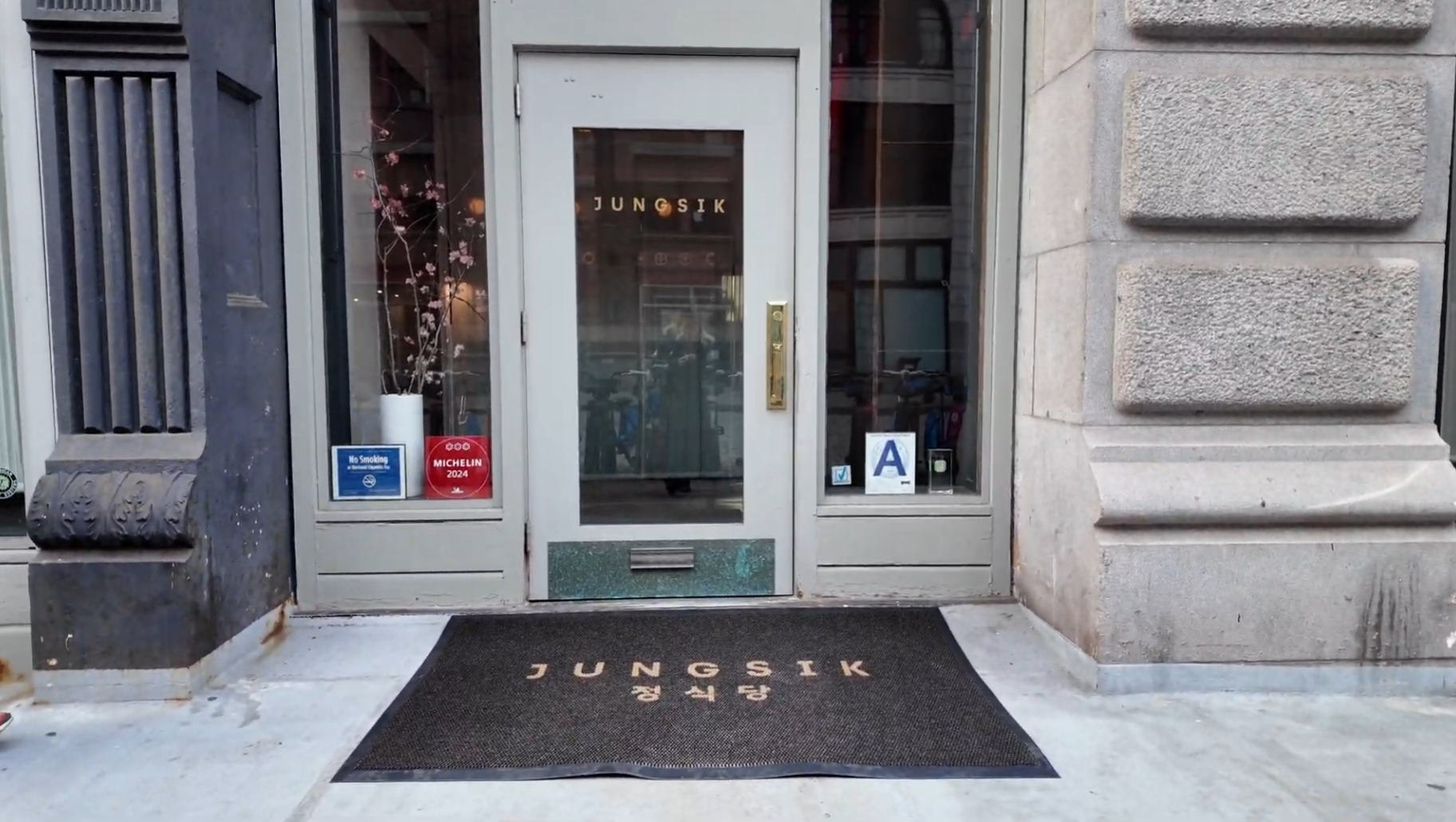
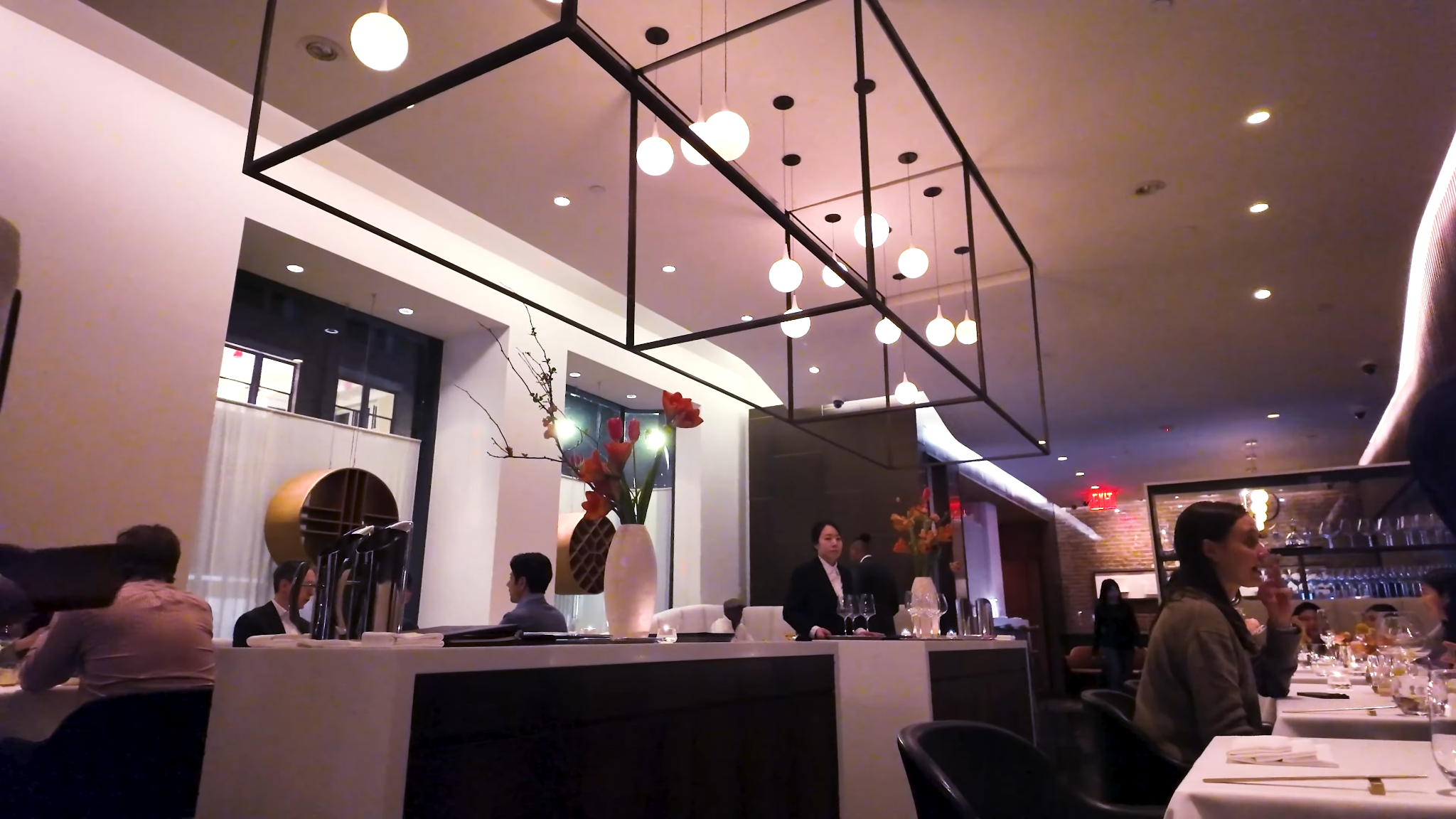
From the street, Jungsik reads polished and discreet. Inside, the room is minimal without being cold. Dark tones, low light, the particular quiet of a dining room that knows exactly what it is. You find yourself speaking more carefully without anyone asking you to.
The Chefs
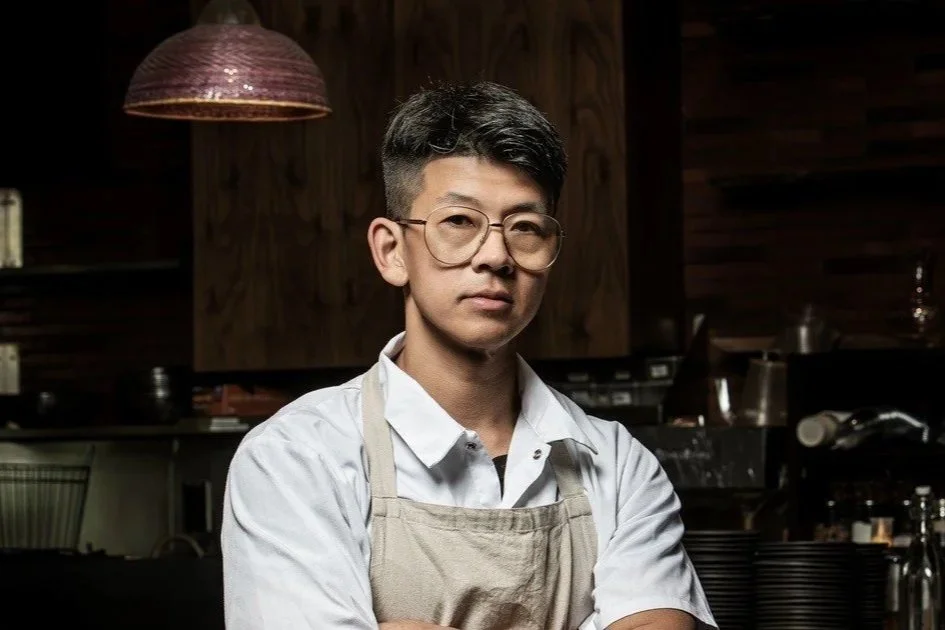
Chef Jungsik Yim did not grow up wanting to be a chef. He entered a kitchen for the first time during mandatory military service, when his superiors needed someone to cook and he was the one available. After the army, he worked a bar, a rice cake shop, a bakery in Seoul, then moved to New York to study at the Culinary Institute of America. After graduating, he staged at Aquavit and Bouley, then spent nine months in the Basque Country training at Akelarre and Zuberoa, where the New Spanish movement was at its peak. He has said the concept for Jungsik came to him over lunch in Spain in about ten minutes. He opened in Seoul in 2009, New York in 2011, and picked up the third star in 2024 after thirteen years.
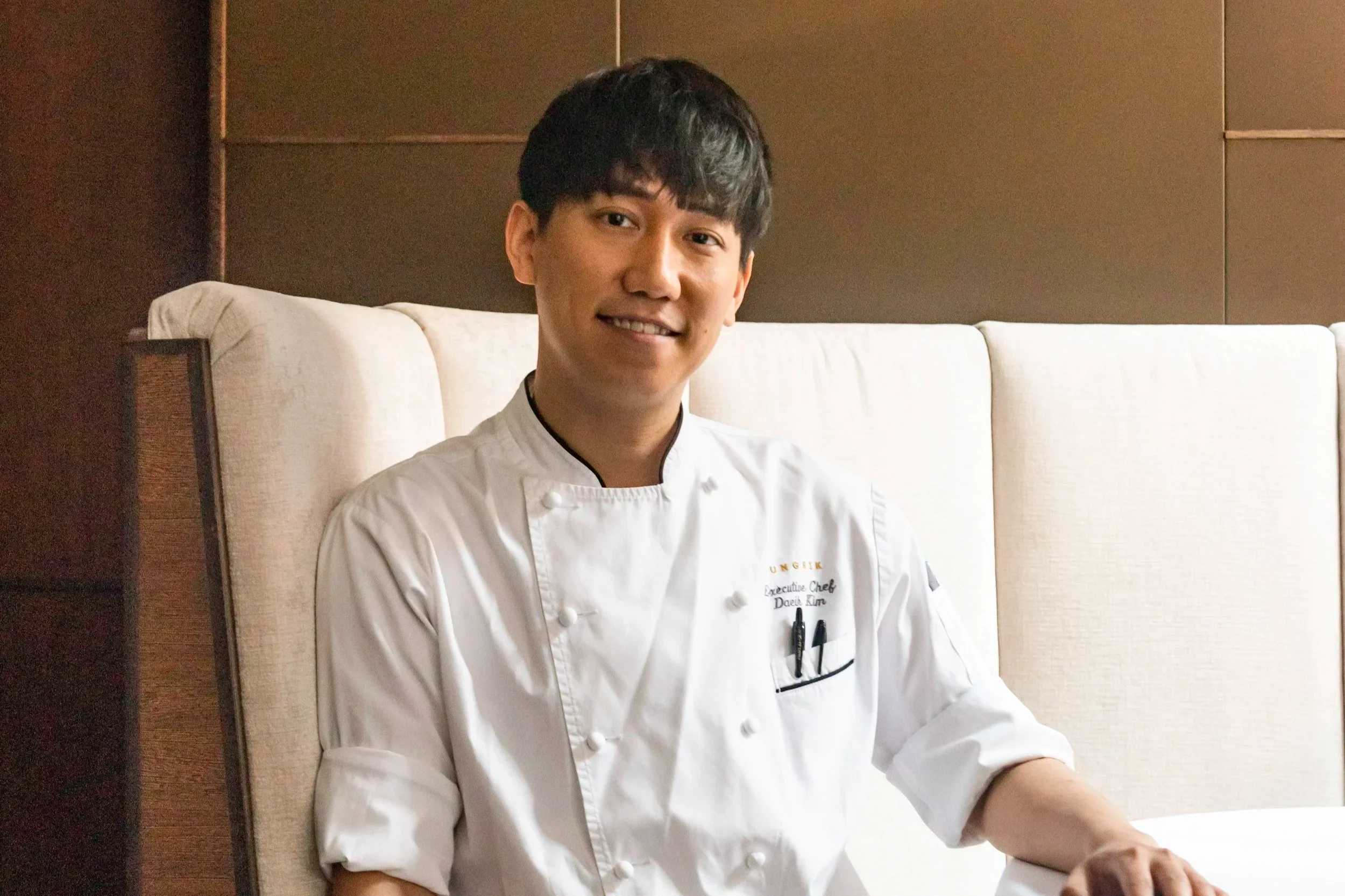
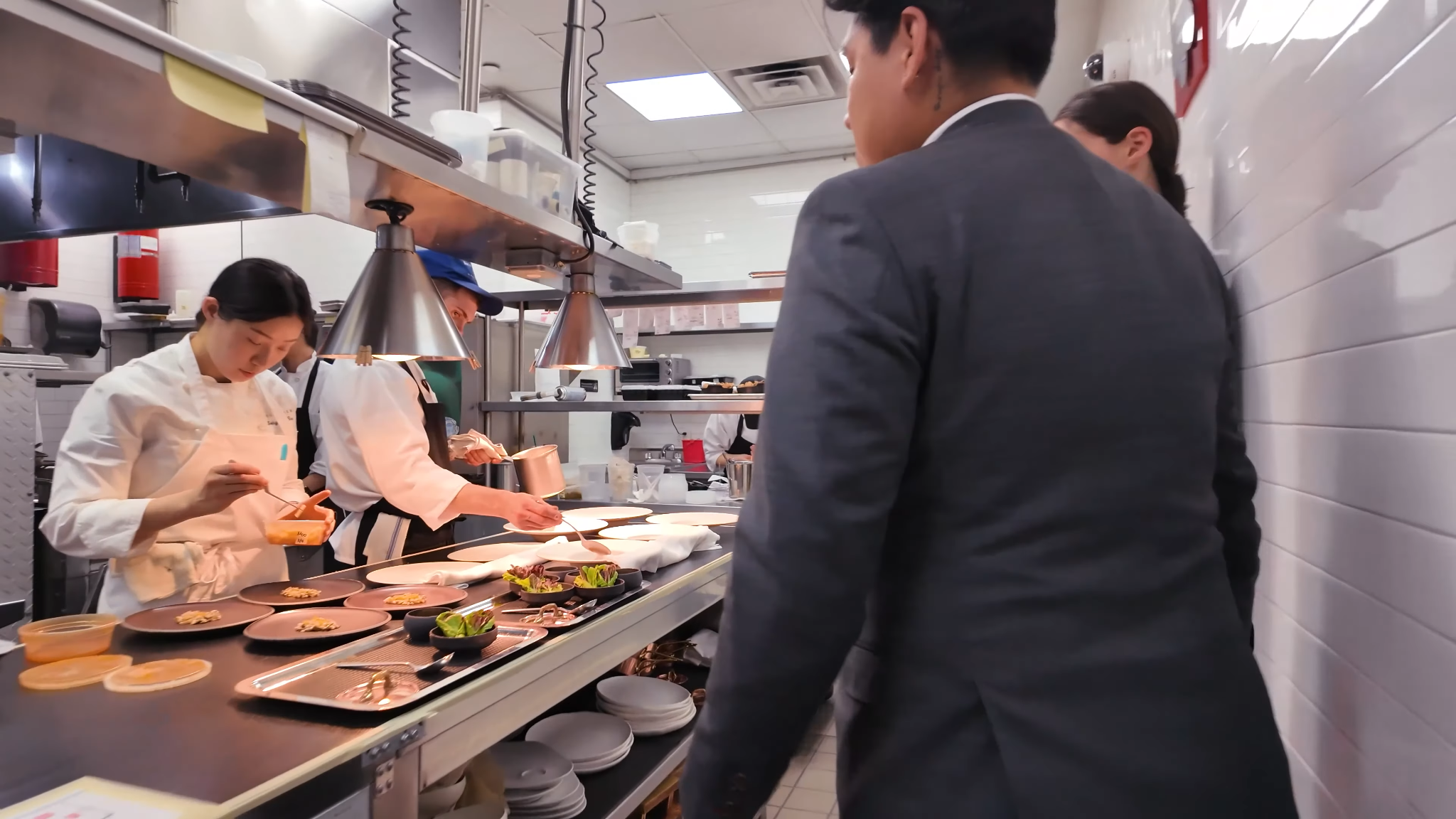
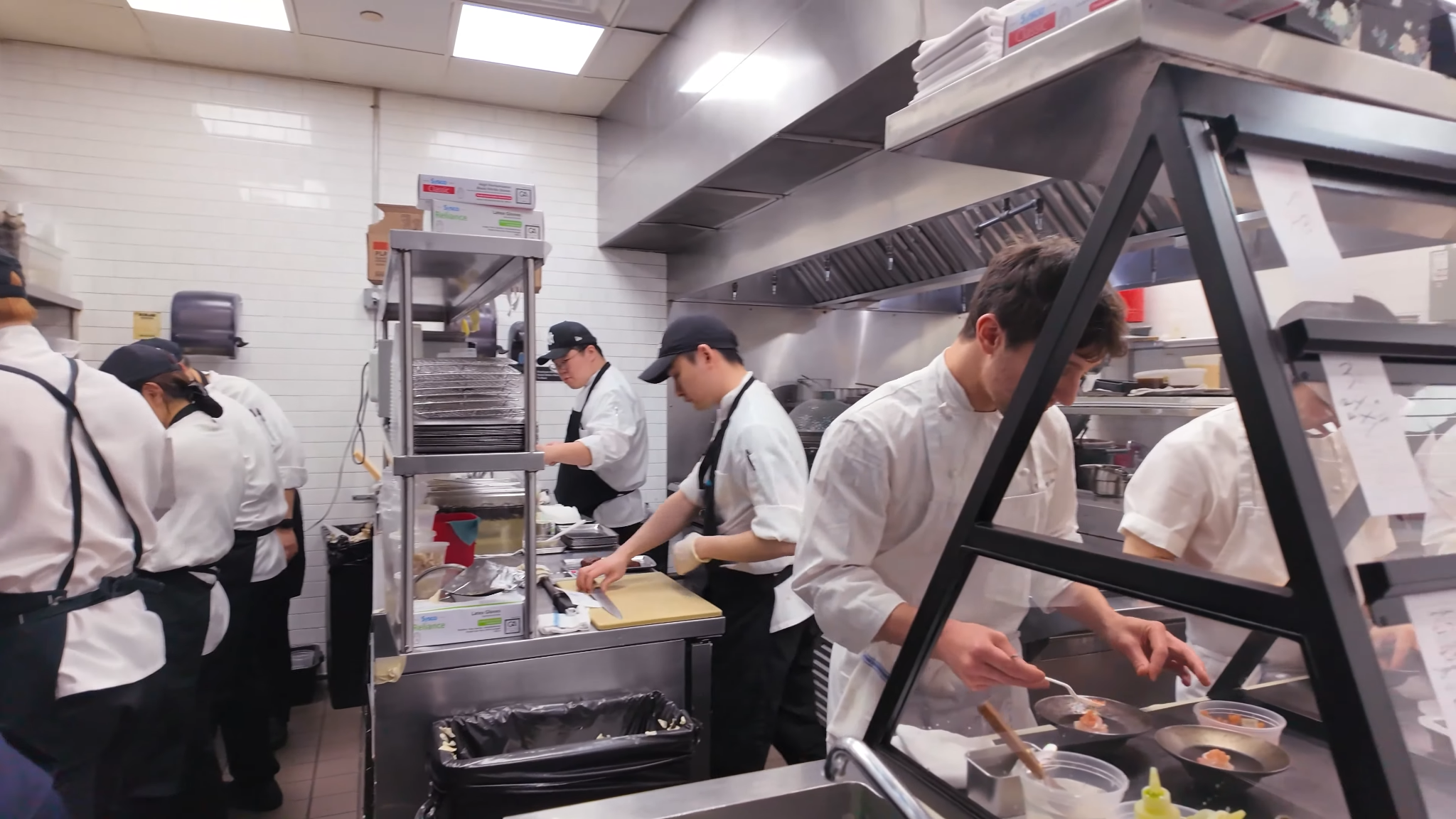
Day to day, the kitchen is run by Executive Chef Daeik Kim. He grew up in Gangwon Province, trained across Korean, Italian, French, Japanese, and Chinese kitchens, studied at the CIA, and joined Jungsik upon graduating in 2018. He rose internally from sous chef up. His cooking philosophy is fundamentals first, creativity second. Knife skills, stocks, proteins. The menu reflects that. Nothing on it is clever for its own sake.
The Menu
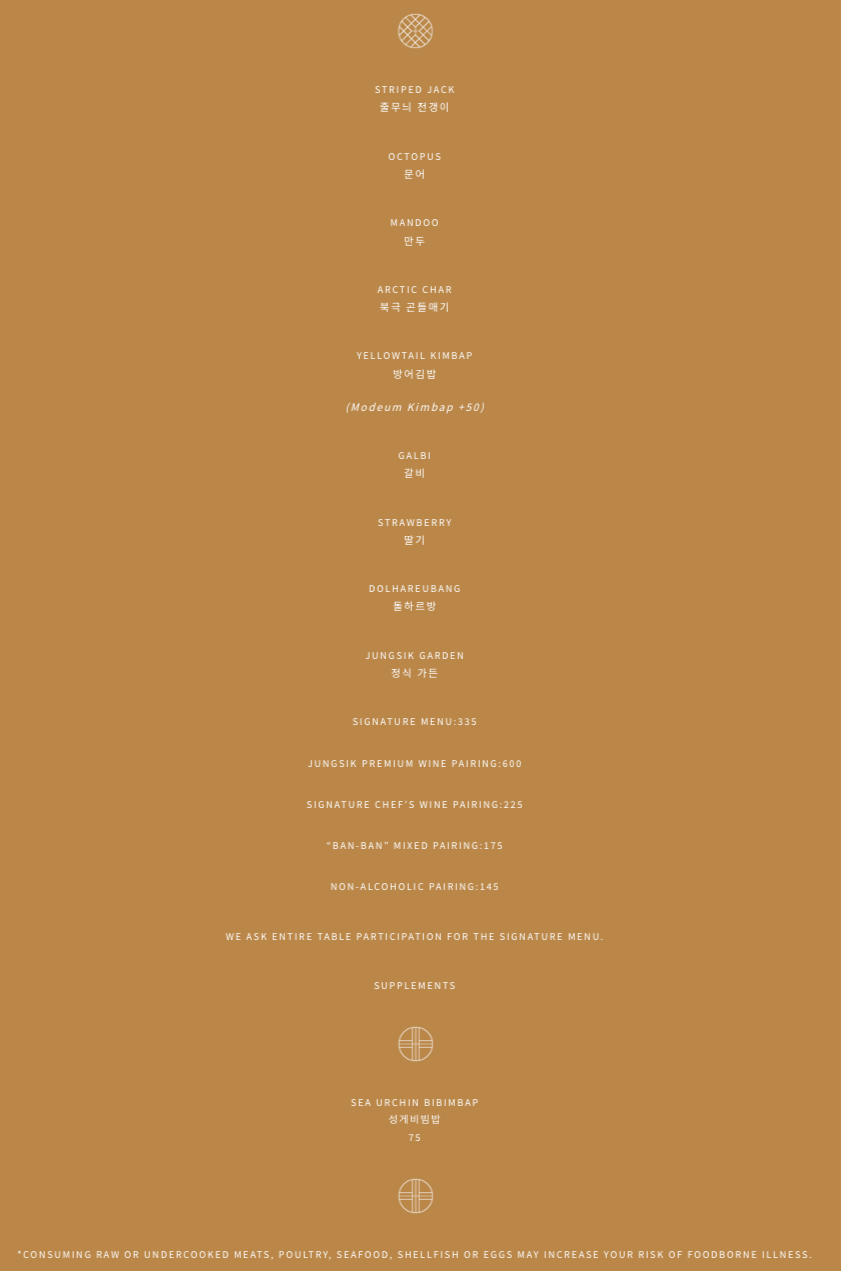
One format: the signature tasting menu. No à la carte in the main dining room, and the kitchen asks for full table participation. The progression opens with a round of five banchan before moving into the main courses: striped jack, octopus, scallop nurungji, arctic char, sea urchin bibimbap, yellowtail kimbap, and galbi, followed by two dessert courses and petit fours. Seven wine pairings run through the meal.
The bar seats à la carte if you want individual dishes without the full commitment.
The Food
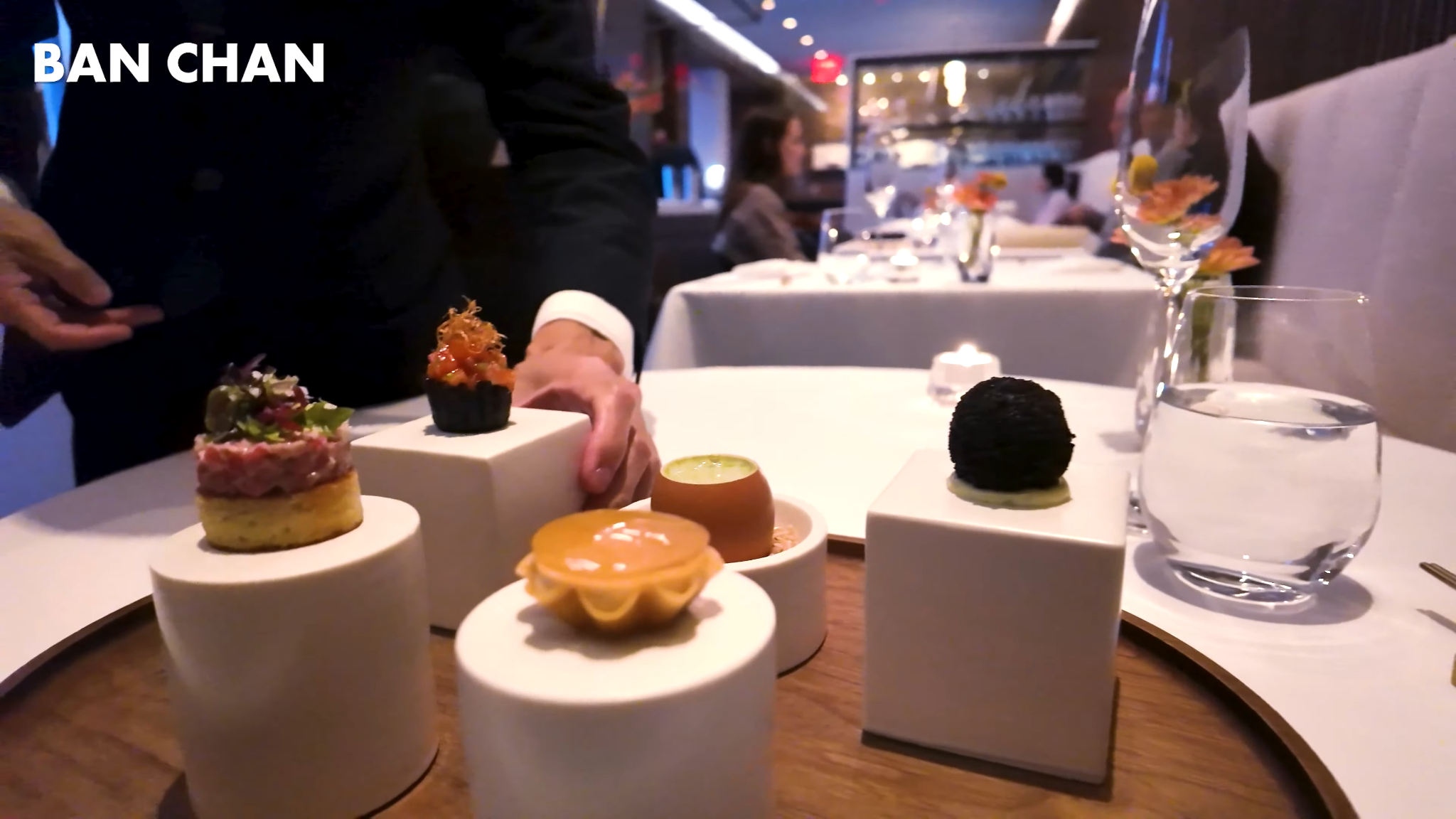
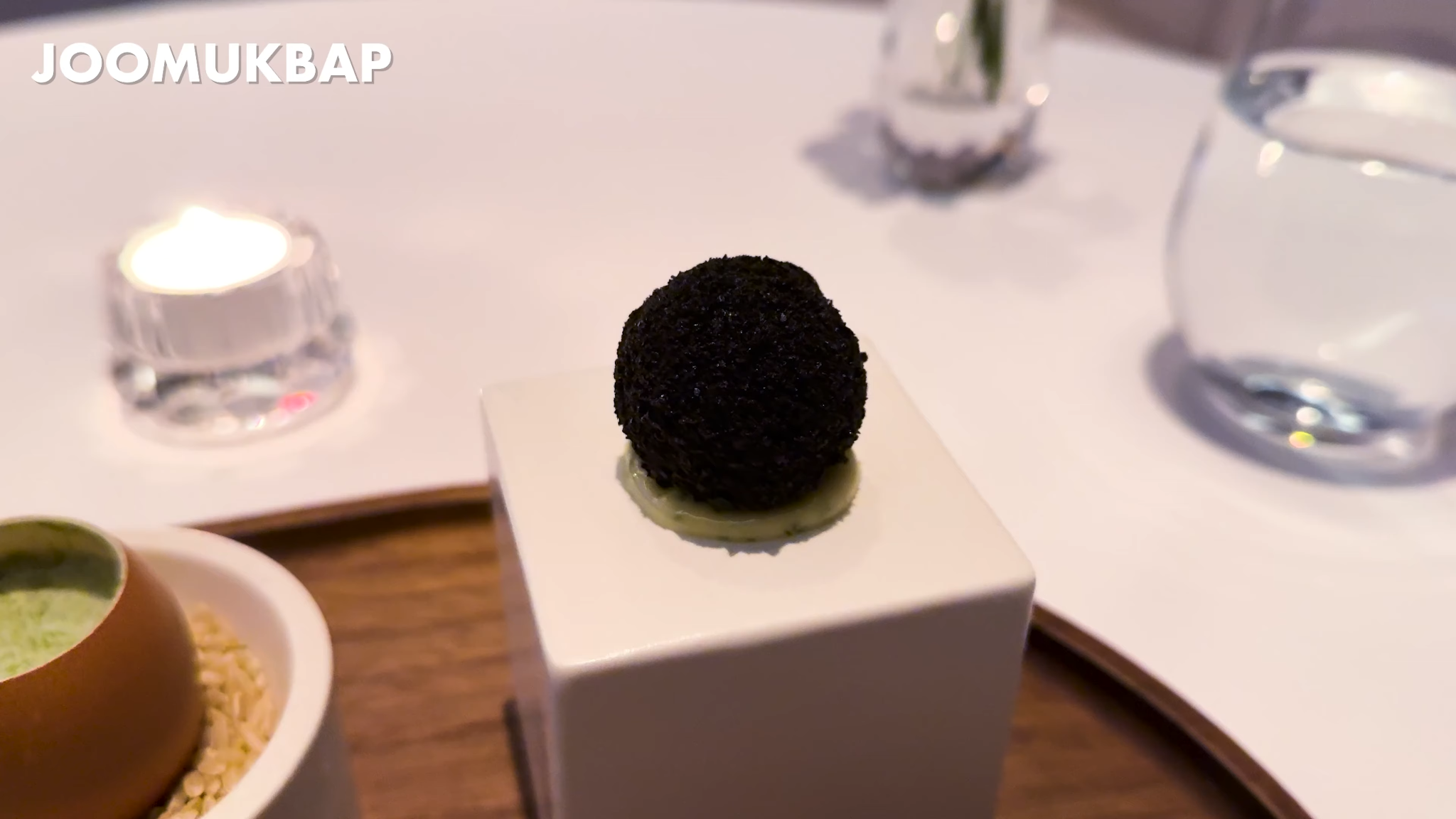
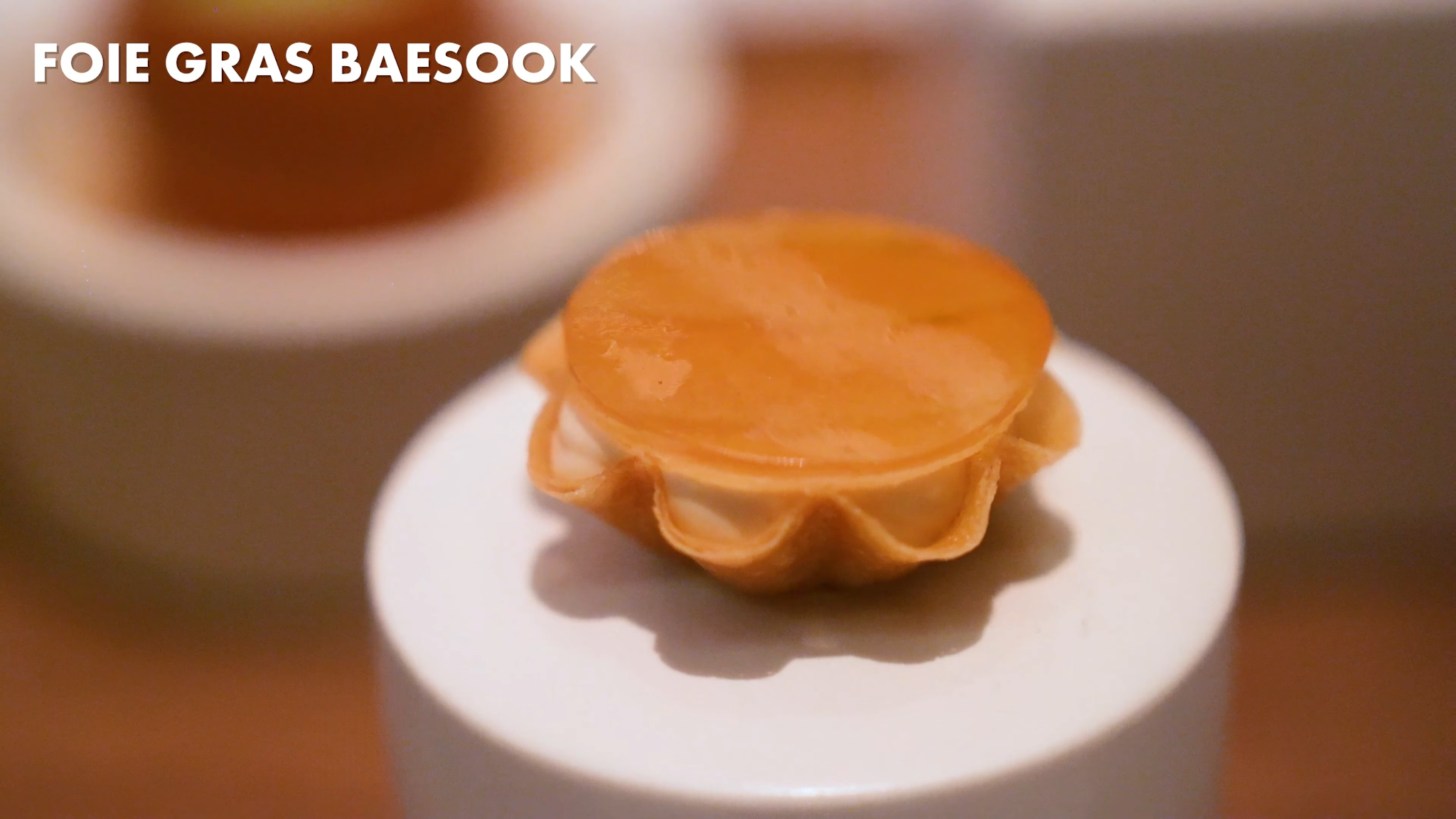
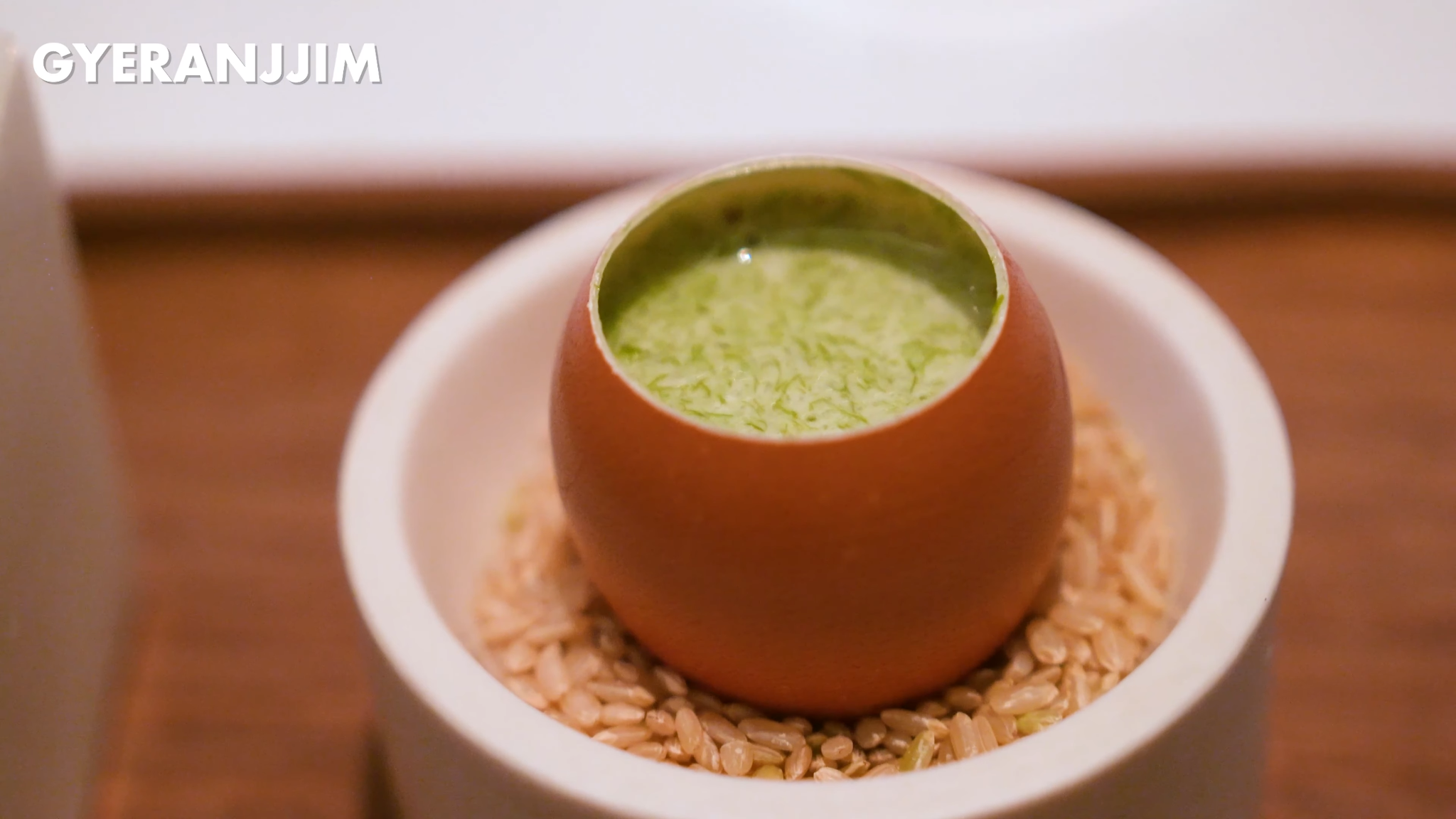
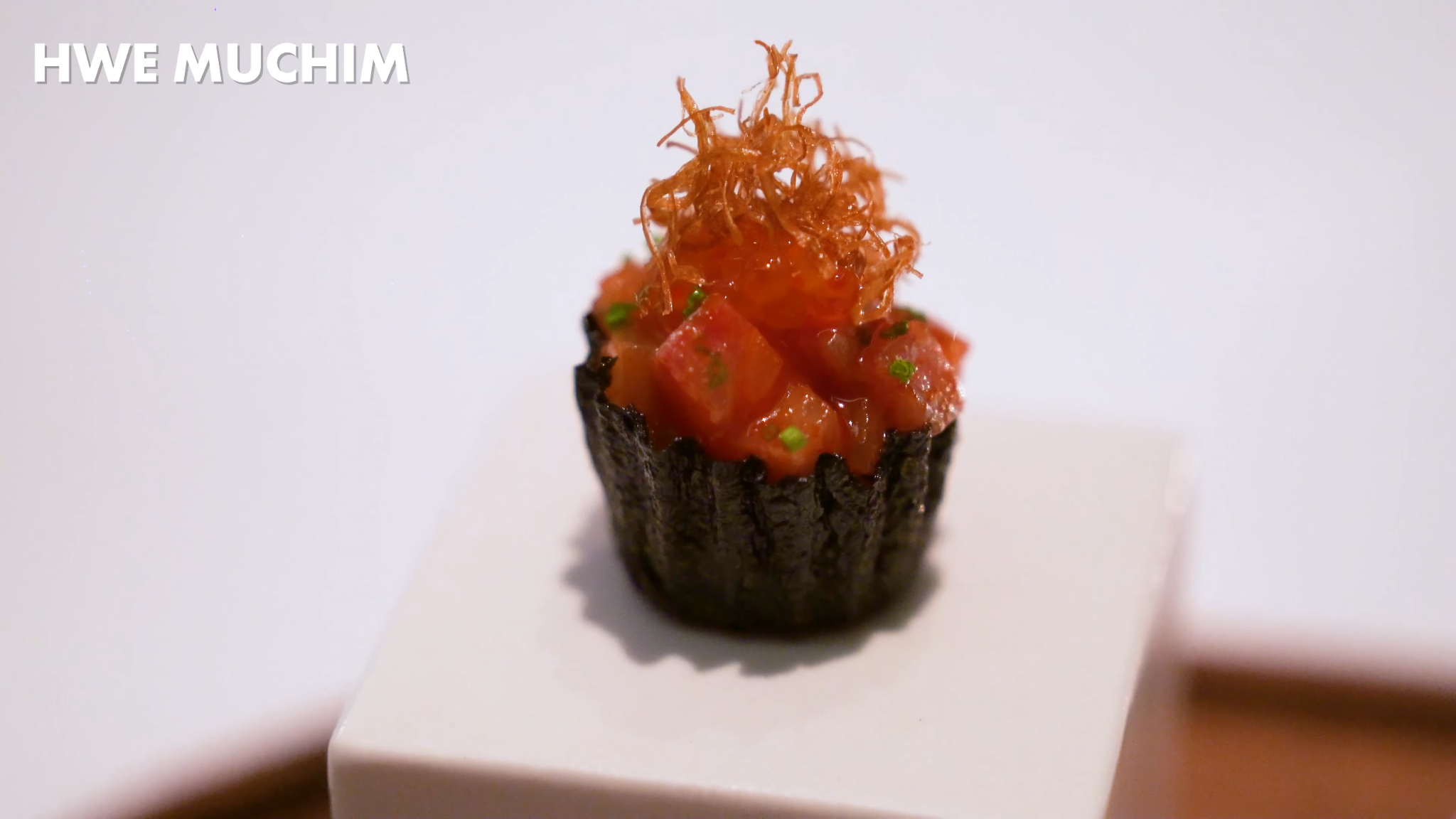
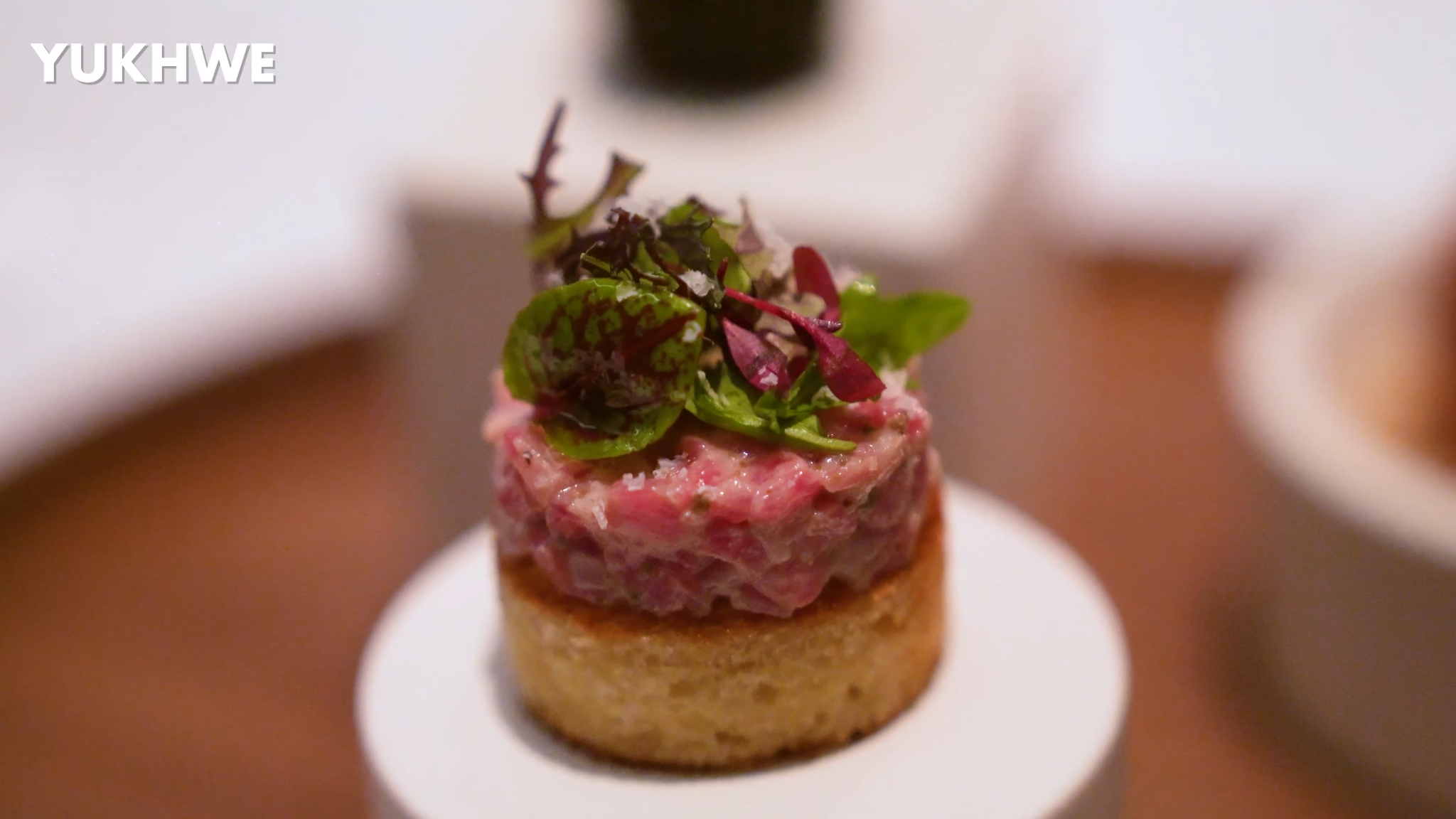
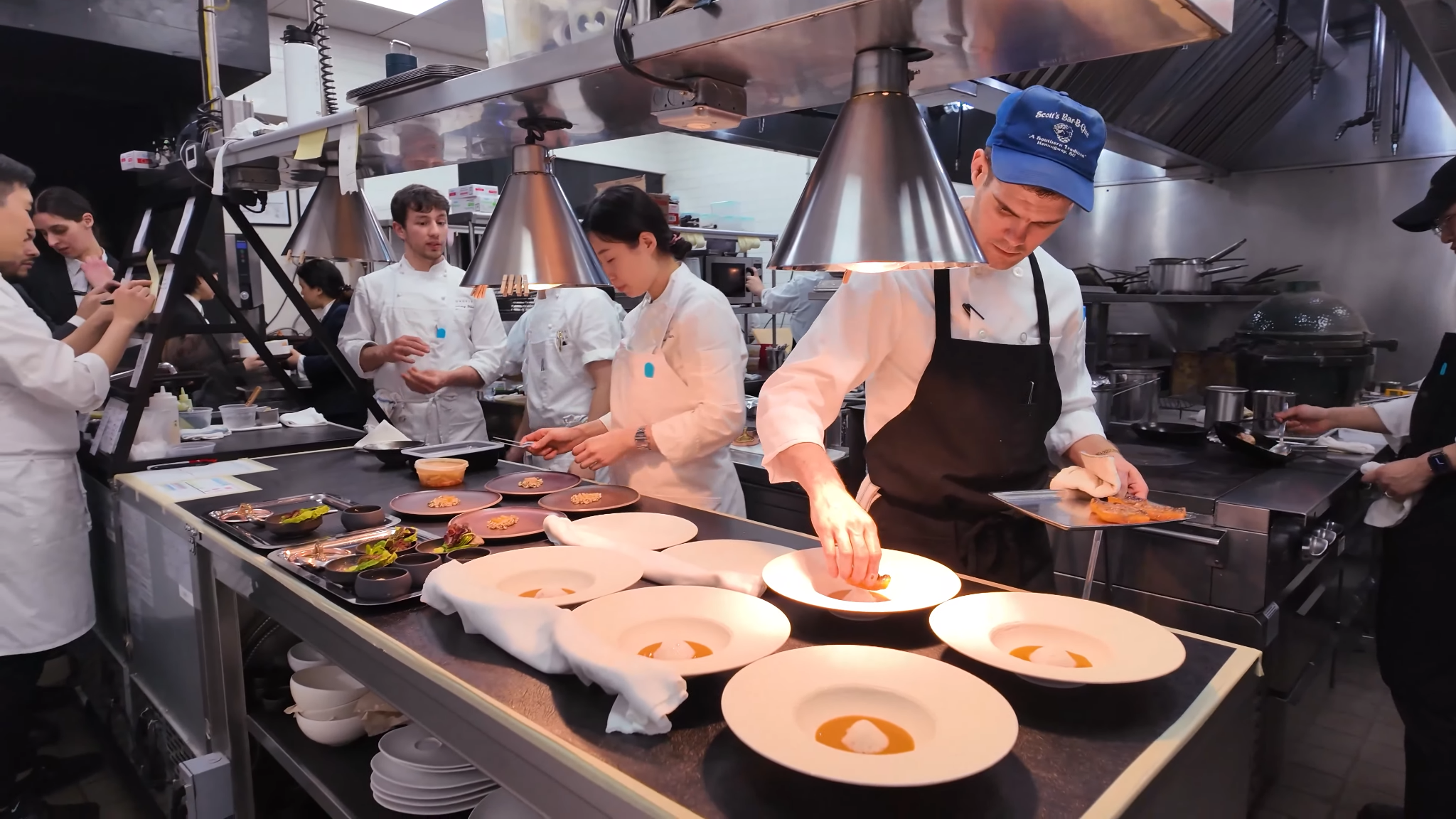
The meal opens with five small dishes that reframe what banchan is allowed to be. The wagyu tartare on brioche is rich and precise, truffle underneath everything. The amberjack tart marinated in gochujang has real heat. The crunch of the shell against the fish, the spice arriving a beat after. Gyeranjjim arrives barely set, a seaweed sauce pooled around it with a briny depth that cleans the palate. The squid ink joomukbap is textural, creamy, sweet and savory in the same mouthful, the aioli so good you question your dignity slightly. The foie gras baesook tart closes the opening act: Asian pear and pine nut cutting the richness before you've had too much of it.
By the time the last banchan clears, the bar has been set somewhere most restaurants can't reach on a full menu. And that was just the amuse-bouche situation.
From there, seven courses. Each one with its own argument.
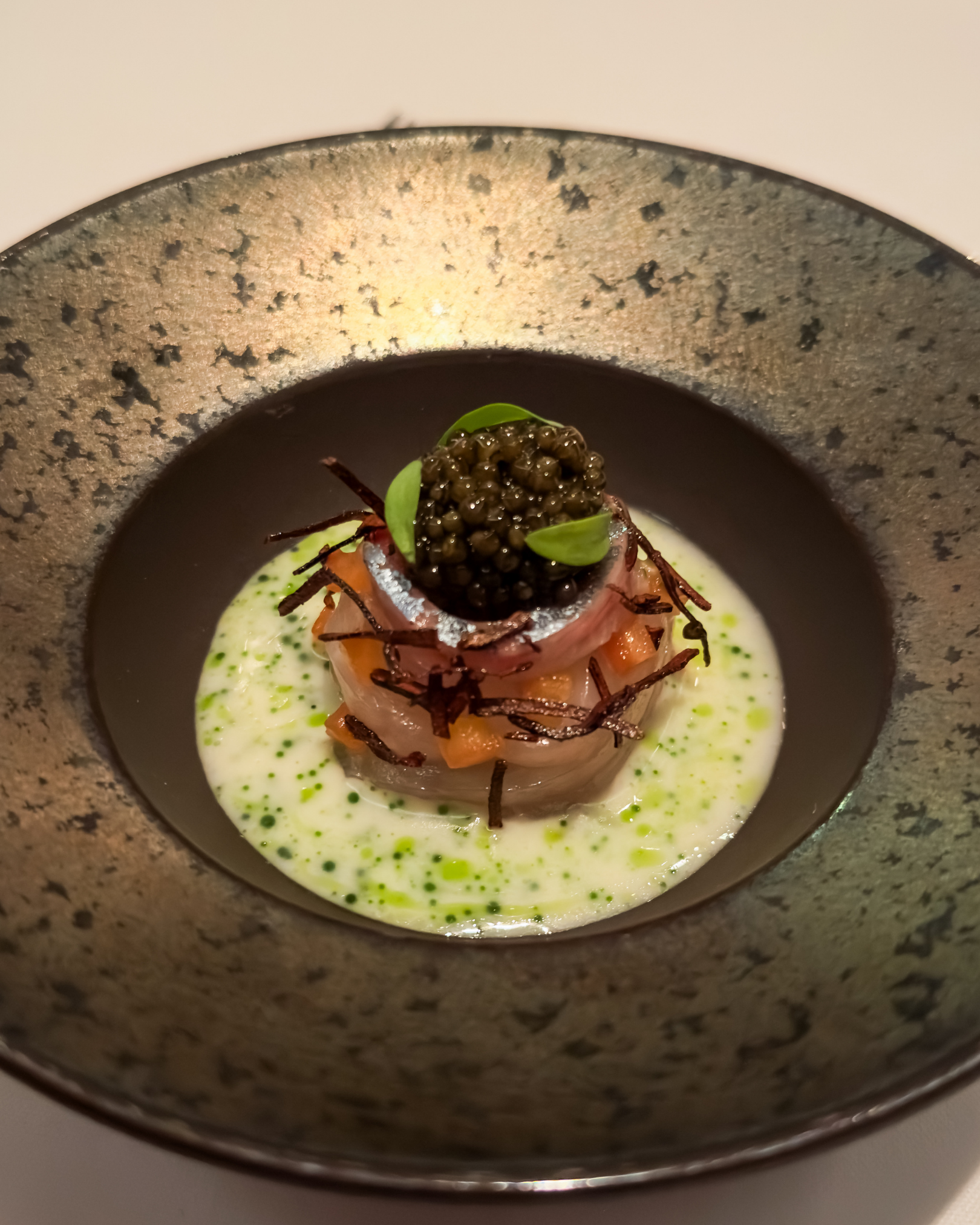
Striped jack — raw, thinly sliced, resting on white kimchi and finished with Ossetra caviar. Clean, cold, precise. A considered way to enter the mains.
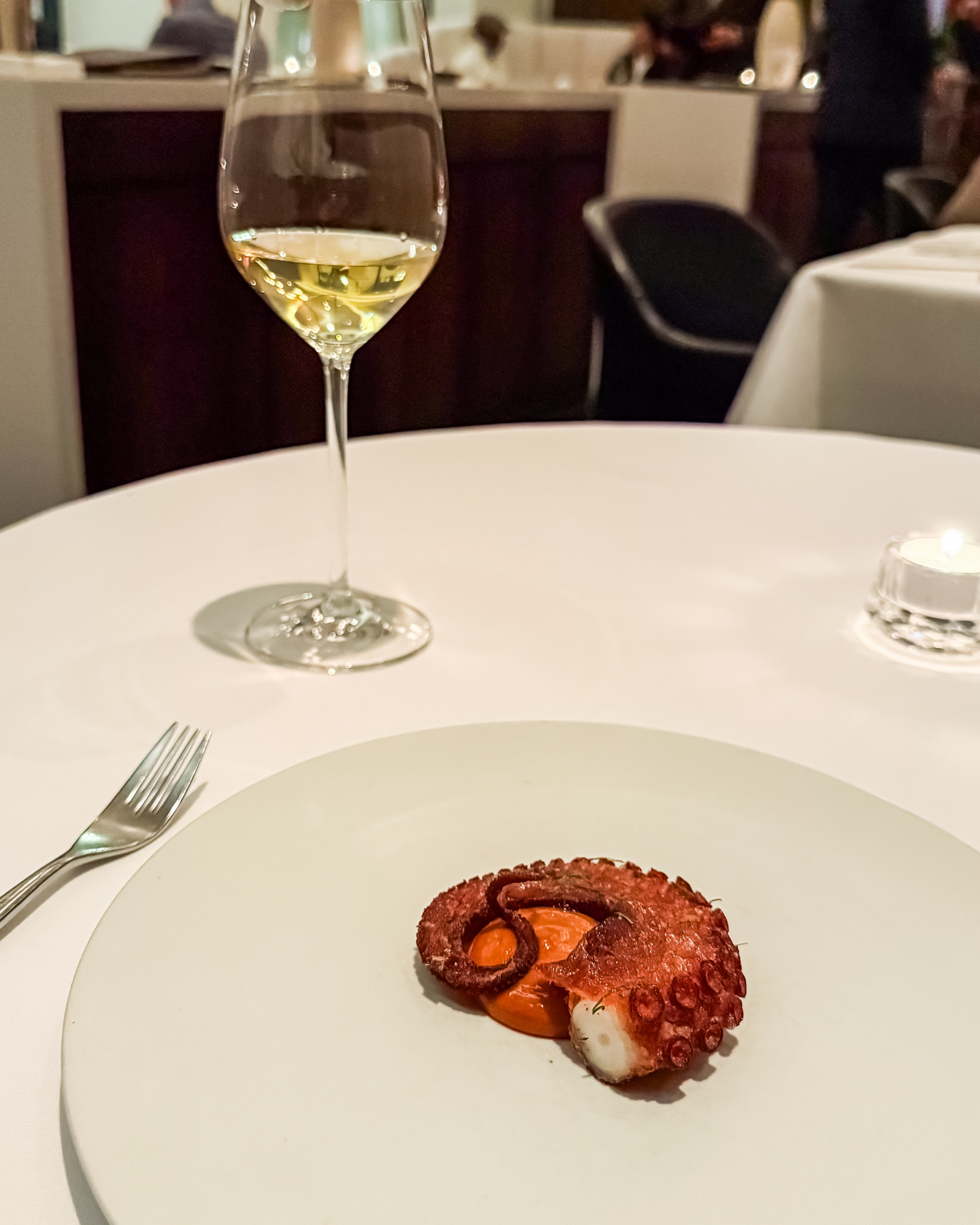
Octopus — braised in dashima broth until it gives, crisped for texture, served with a gochujang aioli that understands restraint. This is the dish people come back for. The wine pairing here deserves its own conversation .
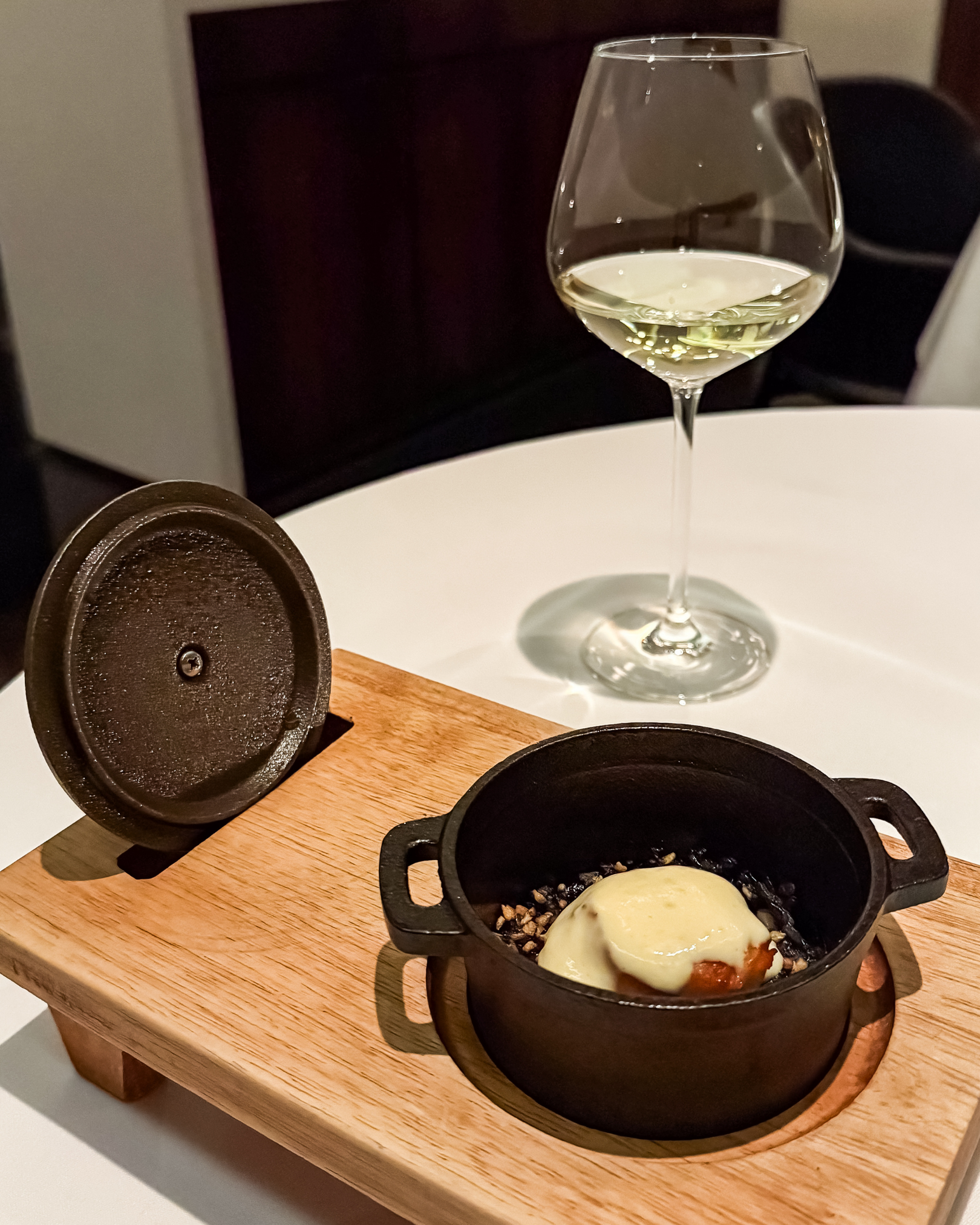
Scallop nurungji — scallops cooked correctly, resting on squid ink crispy rice in a cast iron pan that arrives still sizzling, finished with a citrus sauce. Soft against crisp, the sauce threading through both. The pairing on this course was the best of the night.
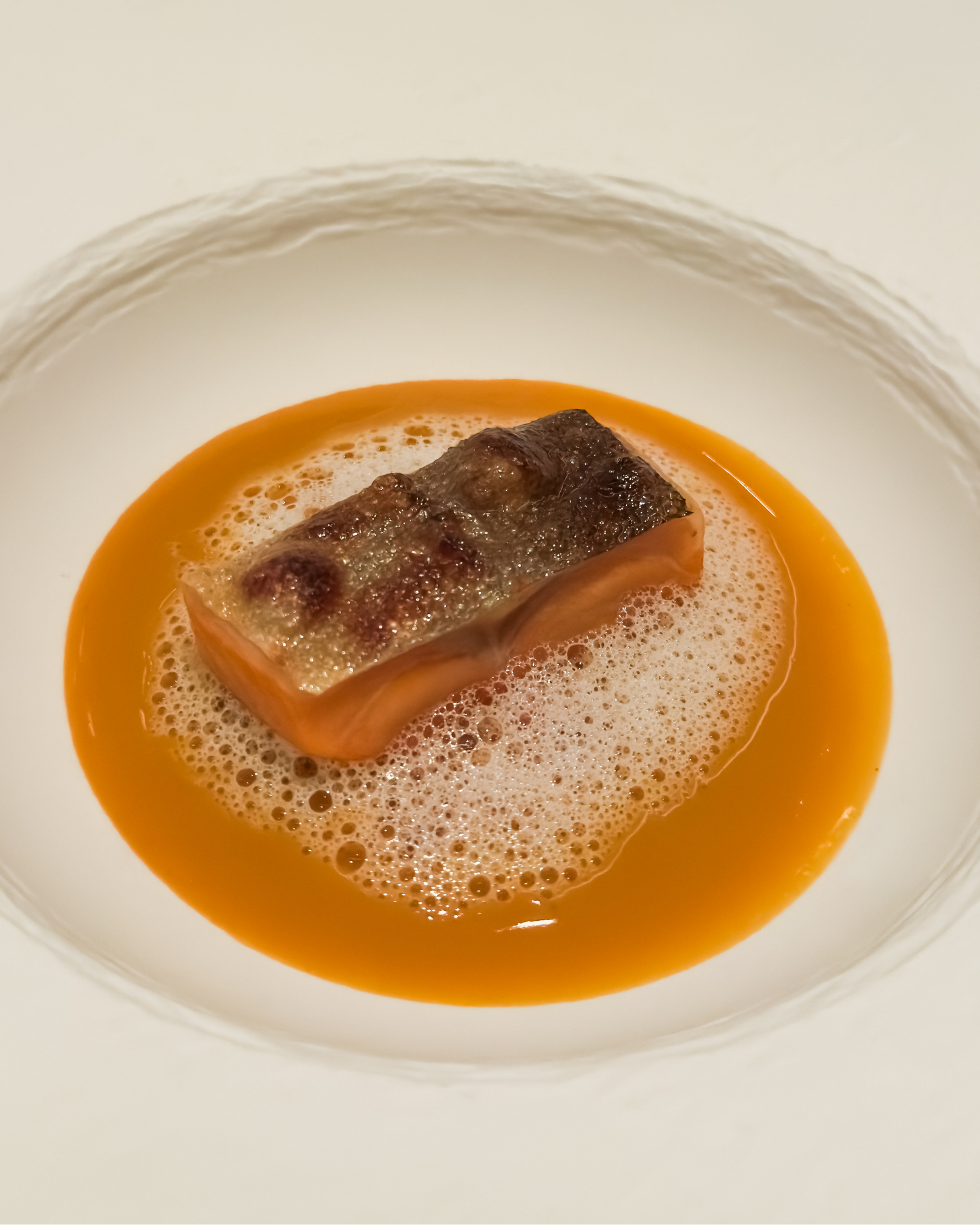
Arctic char — moist under crispy skin, with kimchi curry sauce and coconut foam. The curry's heat is tempered by the coconut into something that moves between spicy, acidic, and creamy without settling on any of them.
Sea urchin bibimbap — Hokkaido uni over seaweed rice and kimchi, finished with crispy quinoa. Creamy, briny, faintly nutty. This is where the Krug came in.
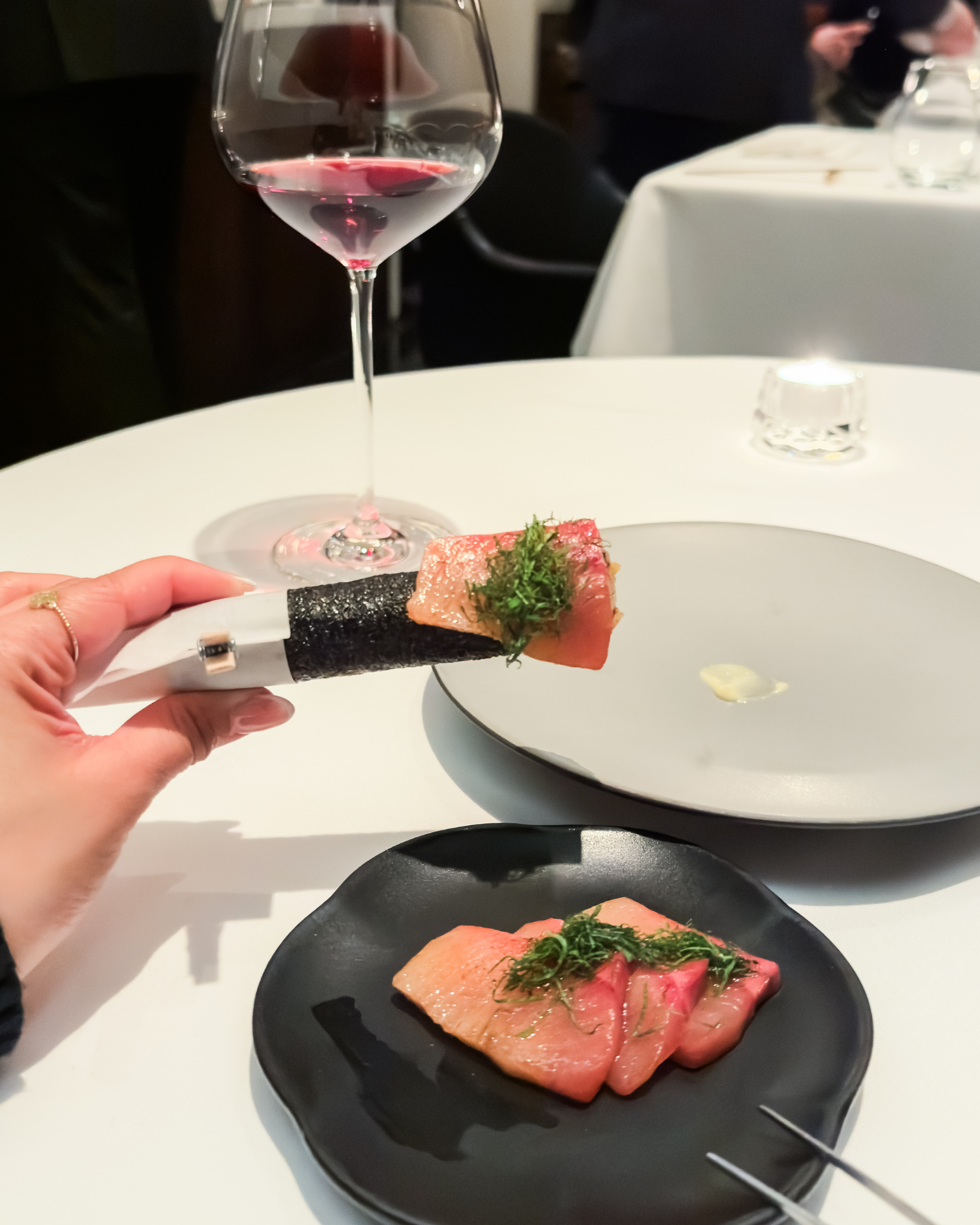
Yellowtail kimbap — truffle-seasoned rice in seaweed, soy-marinated yellowtail placed on top with tweezers provided tableside. Elegant and a little playful.
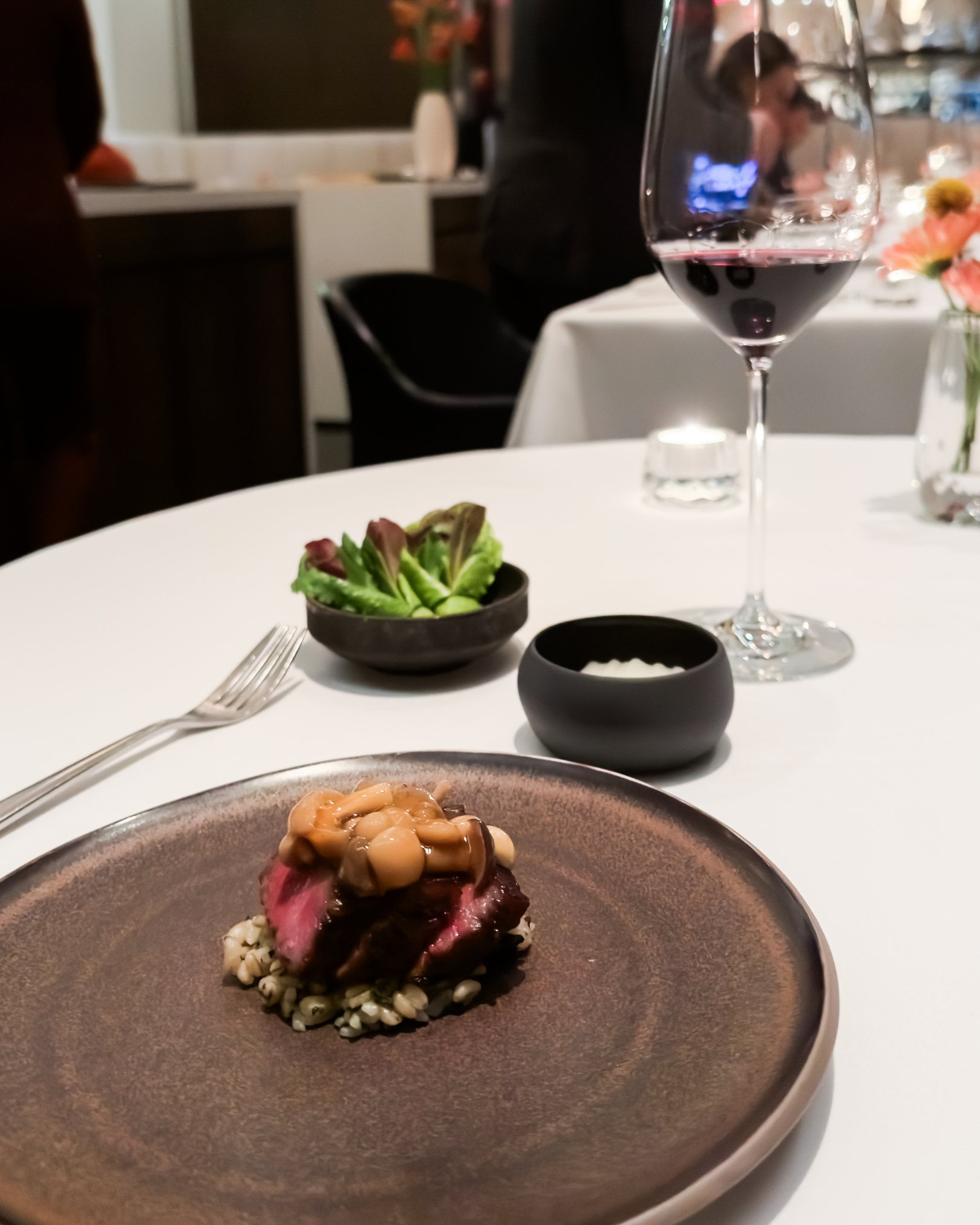
Galbi — American Wagyu short ribs over barley rice and mushrooms, with lettuce wraps and house kimchi. The meat is making a different kind of argument by this point.
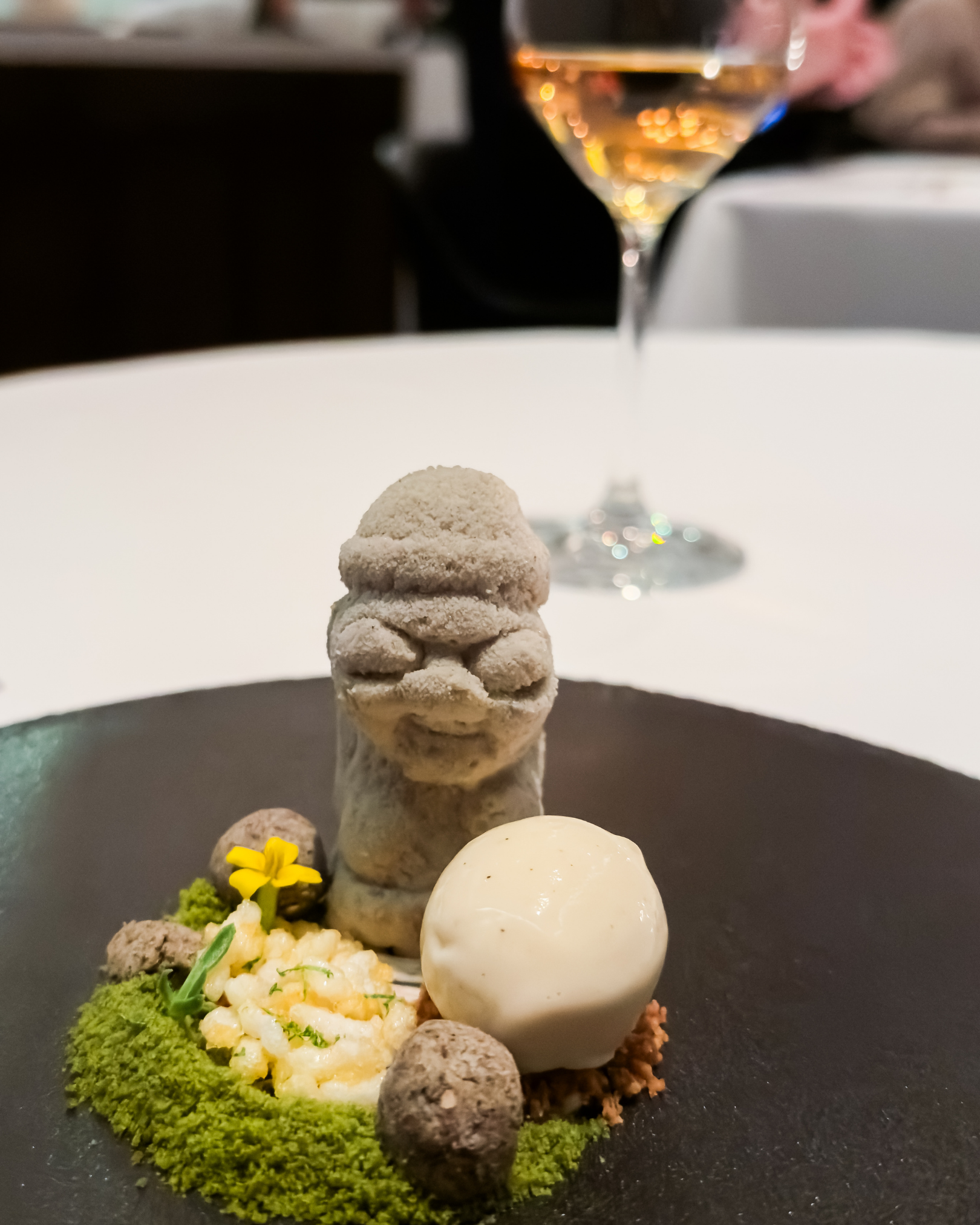
Then dessert. A palate cleanser of calvados sorbet, apple salad, and yuzu marmalade. Then the Dolhareubang: black bean and hazelnut cream shaped to resemble the stone statues of Jeju Island, toasted rice ice cream, matcha grass, sesame boulders. Almost too considered to eat. The final pairing of the night went here.
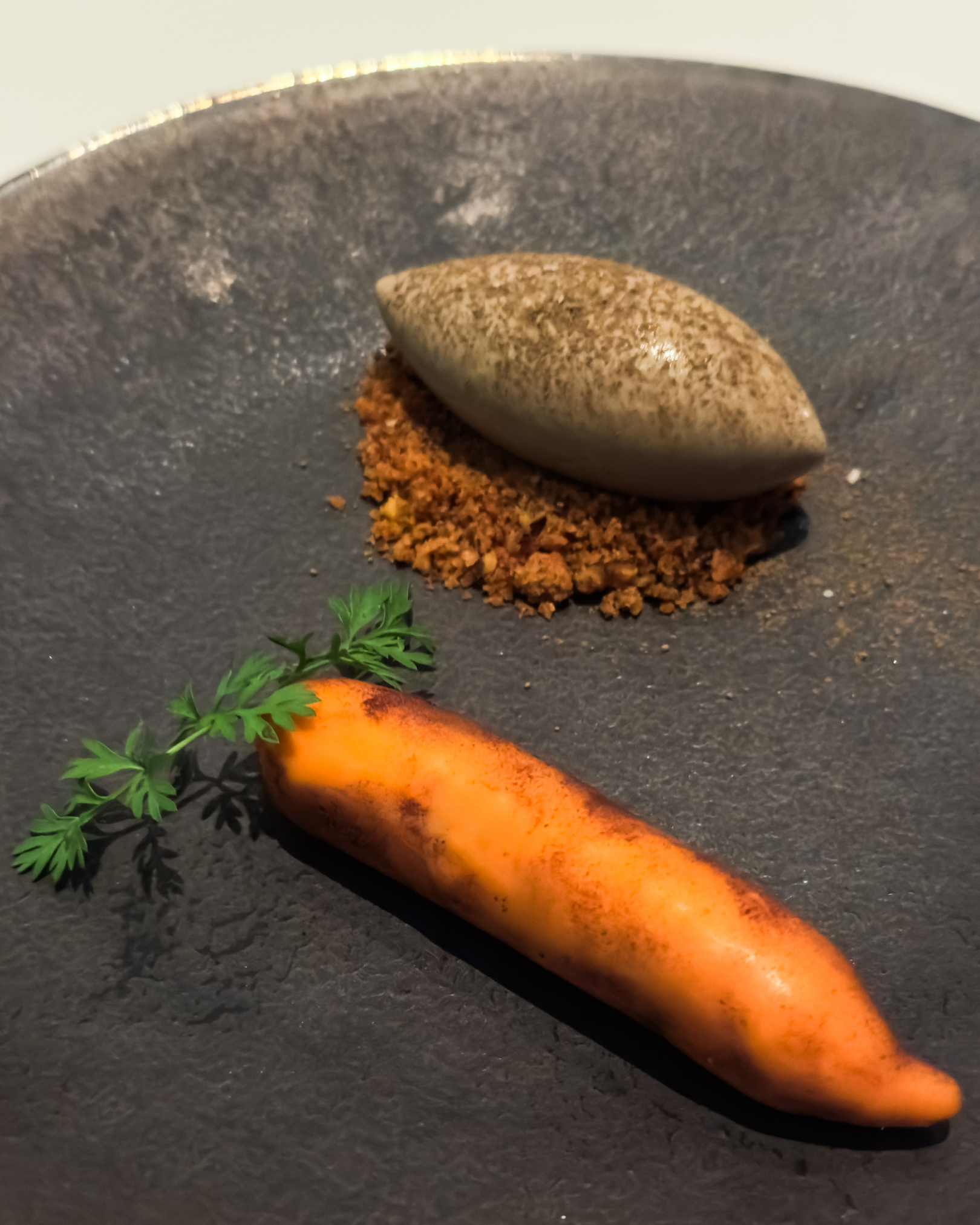
The carrot dessert is exactly what it sounds like and nothing like what you expect. A piece of pastry rendered to look like a garden carrot, carrot cake inside with cream cheese mousse and black tea ice cream. Technically accomplished and genuinely fun.
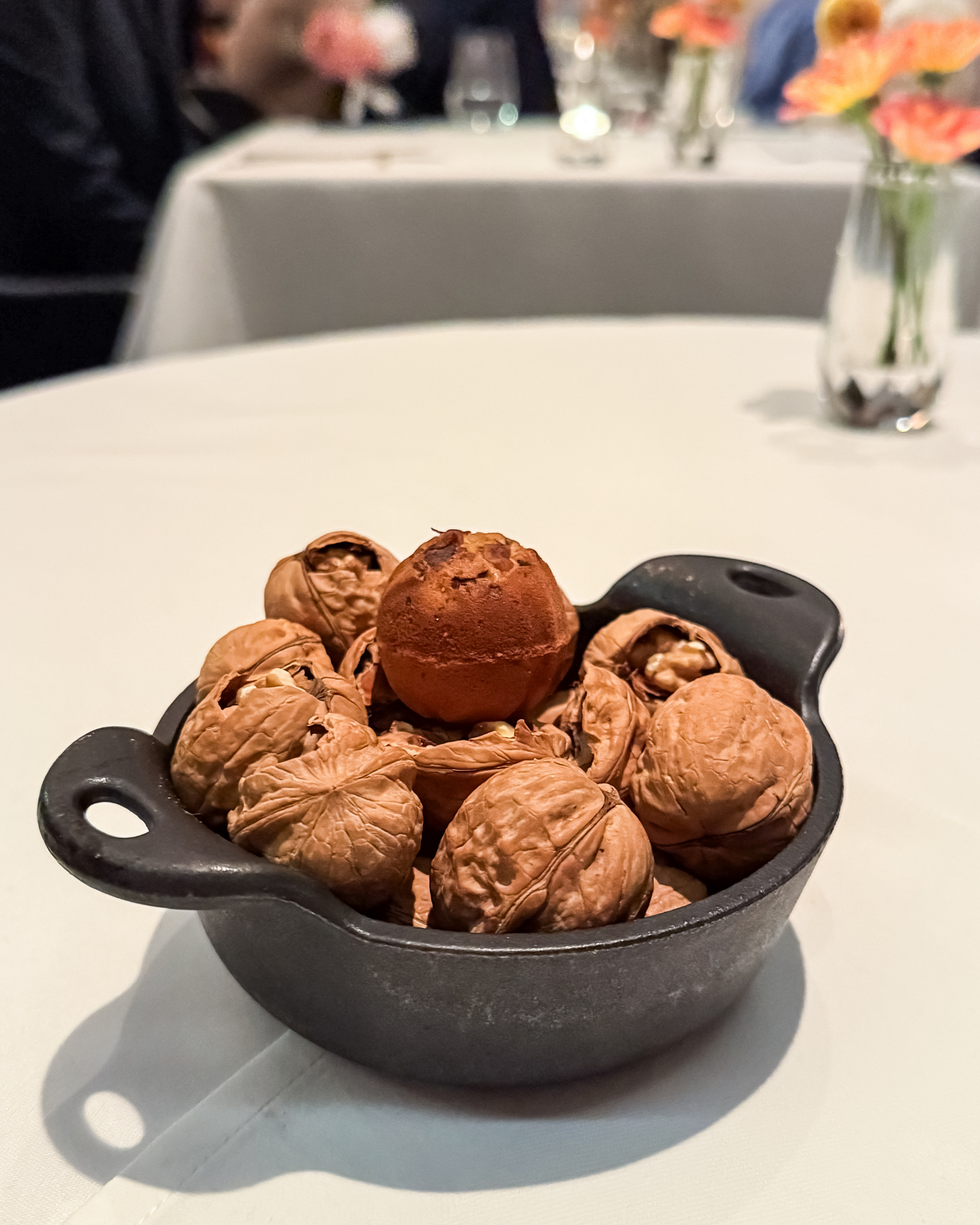
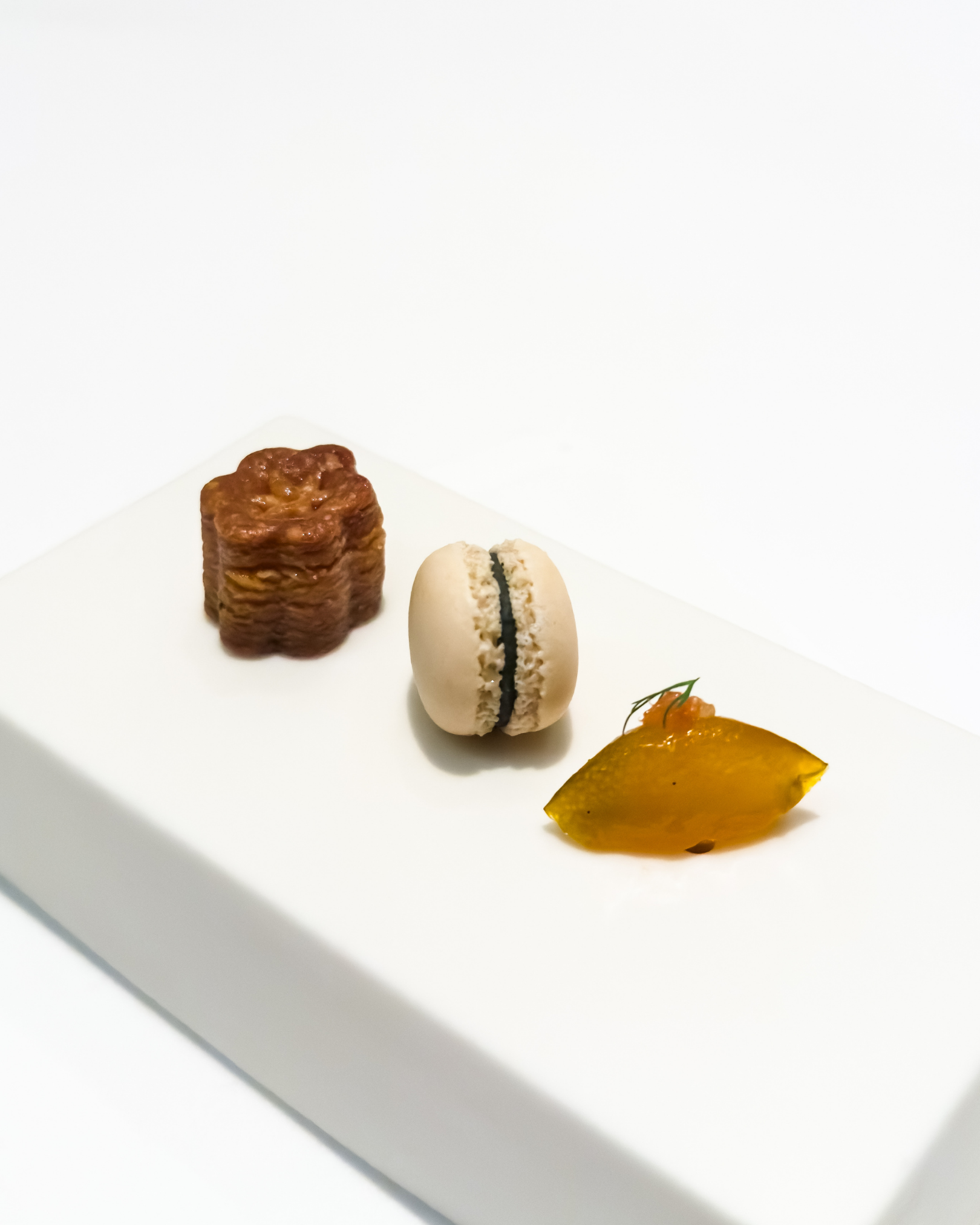
The meal closes with hodugwaja, warm walnut pastry filled with sweet red bean and pastry cream, and petit fours: kumquat jeonggwa candy, an artemisia macaron, a traditional yakgwa honey cookie. Small and precise and Korean. The right note.
The Service
The service works the way good service is supposed to, which is to say you're barely aware it's happening. Courses arrive without ceremony. Questions get answered without performance. The sommelier knows exactly what they're doing and doesn't need you to know that they know.
There is a focused attention in this room that you notice only in its absence everywhere else.
The Receipt
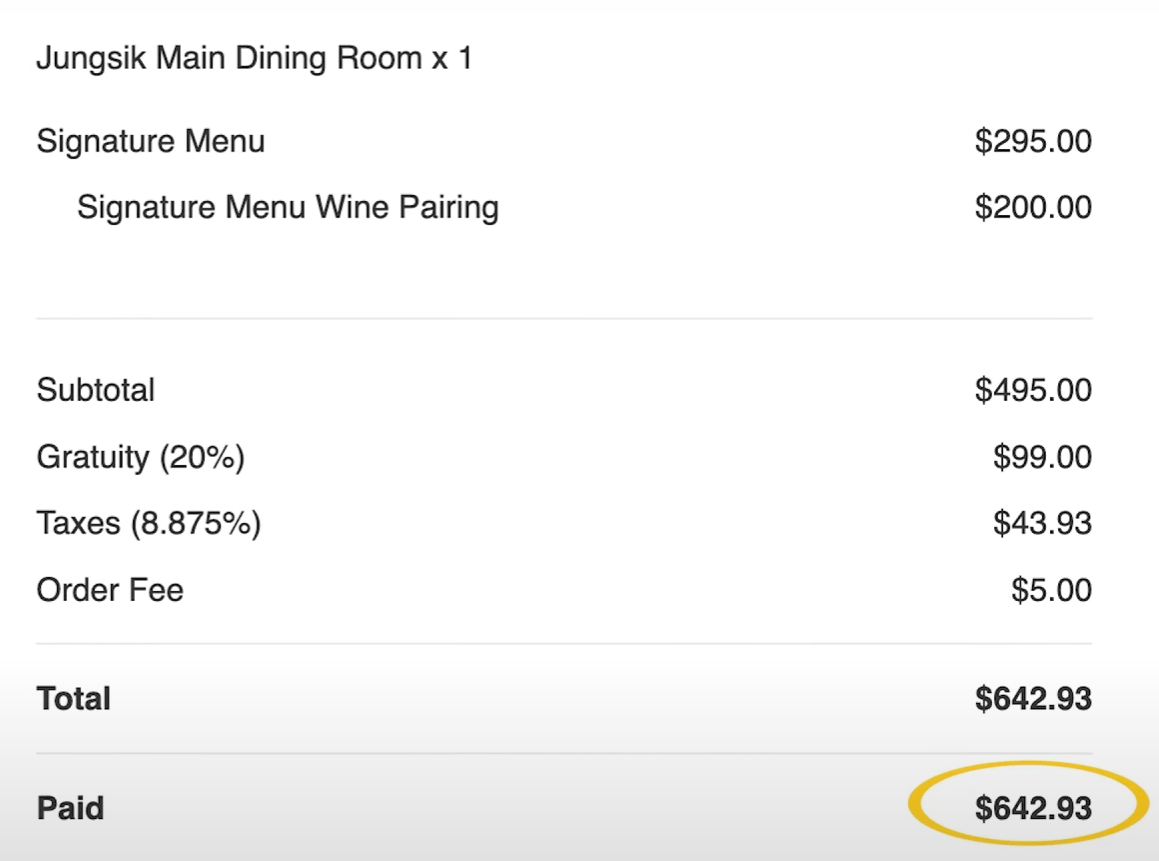
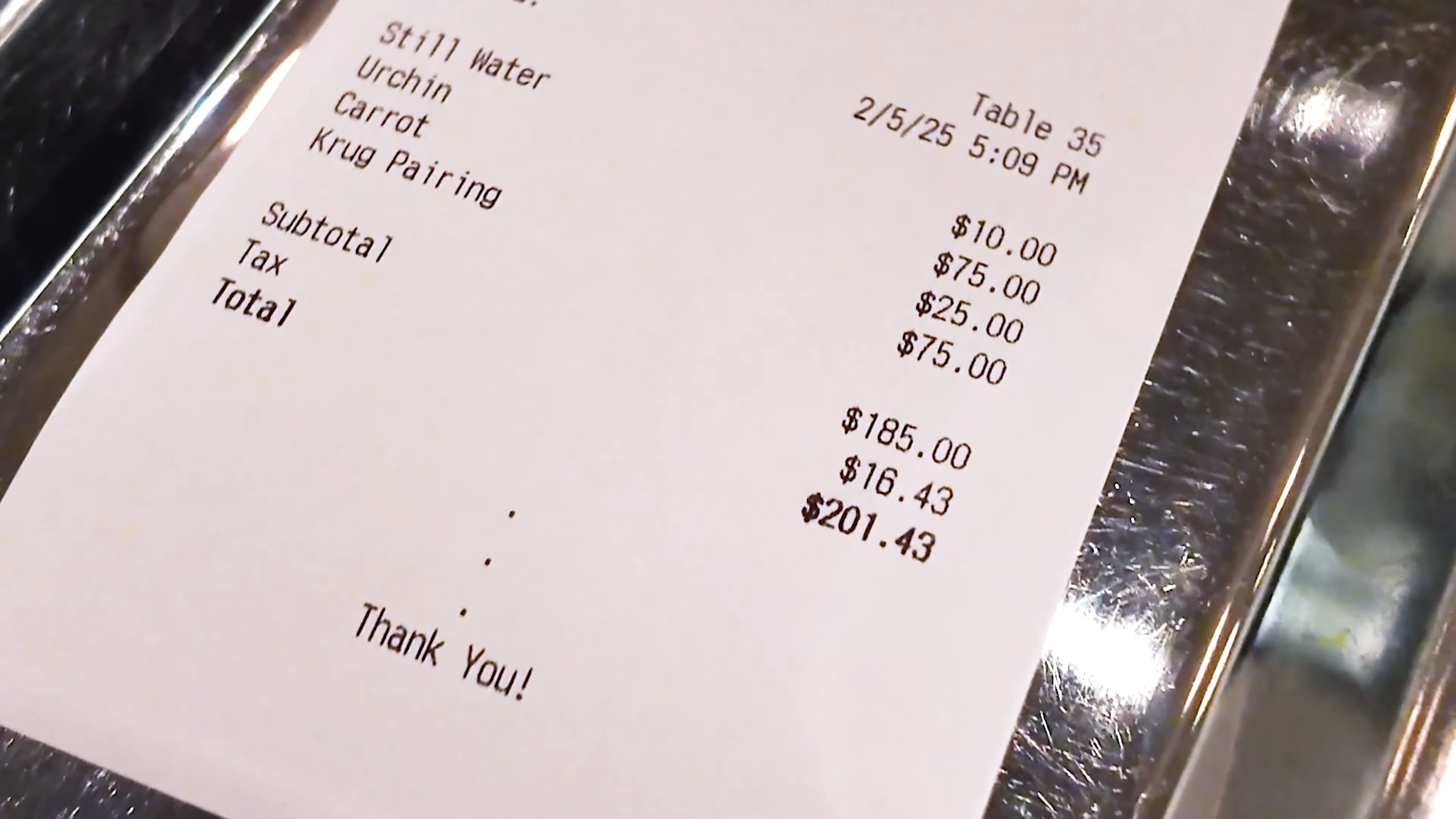
The receipt for one: signature tasting menu, sea urchin bibimbap supplement, carrot dessert supplement, standard wine pairing, one Krug Grande Cuvée upgrade, and 20% gratuity. Grand total: $884.36.
That is what a meal like this costs in New York in 2025. It is also, for the record, worth knowing before you go rather than after.
Who's It For
Anyone who wants to understand what Korean cuisine looks like when a kitchen has every resource and the freedom to push. This is not a casual dinner, but it's not a special-occasion-only room either. The people here are eating seriously, and the kitchen meets them at that level.
If you've been to Per Se, Le Bernardin, or Masa, Jungsik belongs in that conversation. The comparison is not flattery.
Notes
Jungsik
2 Harrison Street, New York, NY 10013 (Tribeca)
Reservations: exploretock.com/jungsik
Hours: Tuesday to Saturday, 5:00 PM to 9:30 PM. Sunday, 5:00 PM to 9:00 PM. Closed Monday. Phone: (212) 219-0900
Private dining: Available, inquire directly
Gift cards: jungsik.com
About the Author
Kelly Gomez is a creative director who eats well, travels far, and lives with intention. She has sat at tables that required months of planning, flown routes that cross a dozen time zones, and found herself in rooms most people never find. She is precise about what she loves and honest about what falls short.
A WSET Level 2 Wine Certified writer and Advanced Open Water Diver, Kelly covers luxury travel, hotels, fine dining, wineries, diving destinations, and the trips built around them.
Her work reaches a US-based audience of travelers between 25 and 44, with a near-even gender split and a meaningful following.
